
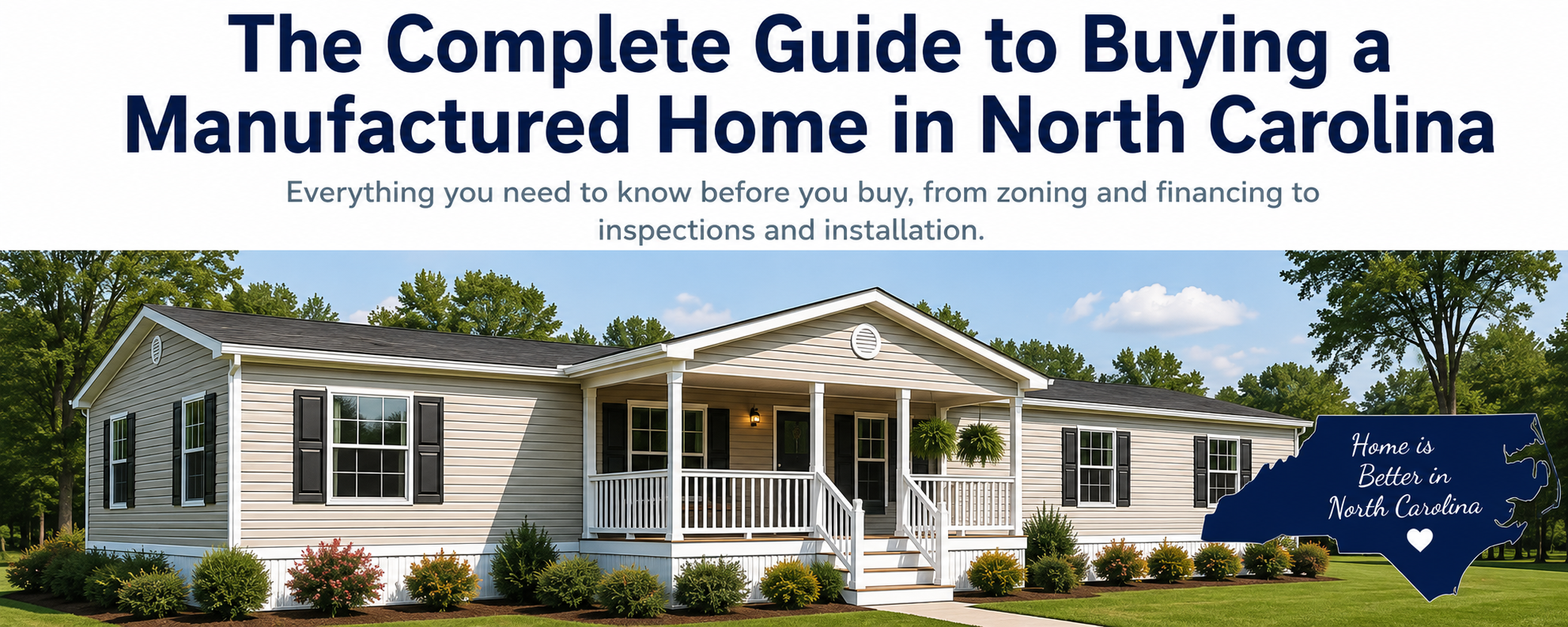
Buying a home is one of the biggest financial decisions you’ll ever make. For many North Carolina families, manufactured homes offer an affordable way to become homeowners without sacrificing comfort, style, or quality.
Today’s manufactured homes are nothing like the mobile homes many people remember from decades ago. Modern manufactured homes are built to strict federal standards, come in a wide range of floor plans, and include features like open-concept living areas, energy-efficient appliances, and luxury finishes.
Whether you’re a first-time homebuyer, downsizing for retirement, or looking for an affordable home on your own land, this guide will walk you through every step of buying a manufactured home in North Carolina.
What Is a Manufactured Home?
A manufactured home is a home built in a factory under the federal HUD (U.S. Department of Housing and Urban Development) building code. Once completed, it is transported to its permanent location and installed on a prepared foundation.
Manufactured homes are available in several sizes, including:
- Single-Wide – Compact and budget-friendly.
- Double-Wide – The most popular choice, offering more space and an open layout.
- Triple-Wide or Multi-Section – Larger homes with layouts similar to traditional site-built houses.
Modern manufactured homes often include:
- Spacious kitchens with islands
- Walk-in closets
- Luxury bathrooms
- Energy-efficient windows
- Smart home features
- Covered porches and decks (optional)
Why Buy a Manufactured Home in North Carolina?
North Carolina has become one of the best states for manufactured home ownership thanks to its affordable land, growing communities, and relatively low cost of living.
Some benefits include:
More Affordable Than Traditional Homes
Manufactured homes generally cost significantly less than comparable site-built homes, making homeownership possible for many buyers.
More Home for Your Money
Many buyers can afford larger floor plans and upgraded features while staying within their budget.
Faster Construction
Because homes are built in a controlled factory environment, construction delays caused by weather are reduced, allowing many homes to be completed more quickly than traditional builds.
Energy Efficiency
Newer manufactured homes are built with improved insulation, efficient HVAC systems, and energy-saving windows that can help reduce utility bills.
Step 1: Decide Where Your Home Will Go
Before shopping for a home, decide where you’ll place it.
Your options may include:
- Land you already own
- Purchasing land
- A manufactured home community
- Family-owned property (if local regulations allow)
Location is one of the biggest decisions you’ll make because it affects permits, financing, utility costs, and resale value.
Step 2: Understand Local Zoning Rules
Not every property allows manufactured homes.
Each county-and sometimes individual cities has its own zoning regulations regarding:
- Minimum lot size
- Setback requirements
- Foundation requirements
- Home size restrictions
- Utility connections
- Road access
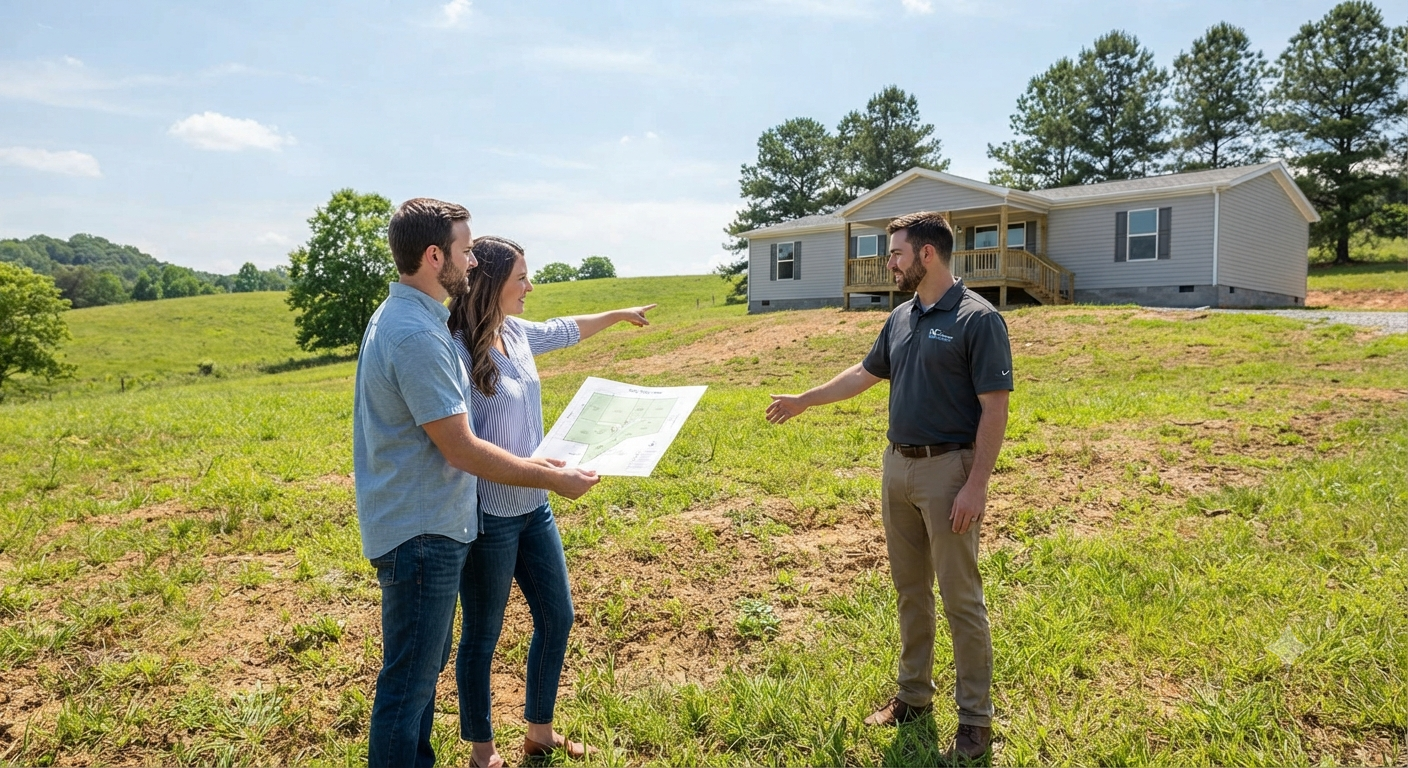
Always contact the local planning or zoning office before purchasing land or a manufactured home.
Doing this early can save you thousands of dollars and prevent unexpected delays.
Step 3: Choose the Right Home
Manufactured homes come in many styles and layouts.
Consider:
Number of Bedrooms
Think about both your current and future needs.
Square Footage
Choose a layout that fits your lifestyle, not just your budget.
Floor Plan
Look for:
- Open-concept living
- Split-bedroom designs
- Home office space
- Large kitchens
- Extra storage
Custom Features
Many manufacturers offer options such as:
- Fireplaces
- Kitchen islands
- Upgraded cabinets
- Walk-in showers
- Covered porches
- Attached garages (where permitted)
Step 4: Set Your Budget
The purchase price is only one part of the total cost.
Additional expenses may include:
- Land purchase
- Site preparation
- Foundation
- Utility connections
- Septic system
- Well installation
- Driveway
- Permits
- Delivery
- Home setup
- Skirting
- Steps and porches
- Landscaping
- Insurance
Creating a complete budget before buying helps avoid surprises later.
Step 5: Explore Your Financing Options
Many buyers assume manufactured homes can’t be financed like traditional homes but that’s not true.
Depending on your situation, financing options may include:
Conventional Loans
Available for many permanently installed manufactured homes that meet lender requirements.
FHA Loans
Often require lower down payments and may be available for qualified buyers.
VA Loans
Eligible veterans and active-duty military members may qualify for VA financing if the home meets program requirements.
USDA Loans
Some rural areas in North Carolina may qualify for USDA loan programs, depending on eligibility requirements.
Speak with lenders who regularly finance manufactured homes, as they understand the unique requirements involved.
Step 6: Buy New or Used?
Buying New
Advantages include:
- Manufacturer warranty
- Modern designs
- Better energy efficiency
- Latest building standards
- Greater customization
Buying Used
Advantages include:
- Lower purchase price
- Faster availability
- Established location
If buying used, always have the home professionally inspected before completing the purchase.
Step 7: Get a Professional Home Inspection
A home inspection is recommended whether you’re buying new or used.
An inspector can check:
- Roof condition
- Plumbing
- Electrical systems
- HVAC
- Flooring
- Foundation
- Structural components
- Doors and windows
- Moisture damage
- Installation quality
An inspection can identify issues before they become expensive repairs.
Step 8: Prepare the Land
Before delivery, your property needs to be ready.
This often includes:
- Clearing trees
- Grading the site
- Installing a driveway
- Preparing the foundation
- Connecting utilities
- Installing a septic system (if needed)
- Drilling a well (if needed)
Proper site preparation helps ensure a smooth installation.
Step 9: Installation and Final Inspection
Once your home arrives, licensed installers will:
- Position the home
- Level it
- Anchor it securely
- Connect utilities
- Complete finishing work
Your local jurisdiction may perform inspections before the home can be occupied.
Common Mistakes to Avoid
Many first-time buyers make avoidable mistakes.
Try to avoid:
- Buying land before checking zoning rules
- Forgetting to budget for site preparation
- Choosing the wrong floor plan
- Skipping the inspection
- Working with lenders unfamiliar with manufactured homes
- Not comparing insurance options
- Ignoring future resale value
Planning ahead can save both time and money.
Frequently Asked Questions
Are manufactured homes safe?
Yes. Modern manufactured homes are built to federal HUD construction and safety standards and are designed to meet strict requirements.
Can I put a manufactured home on my own land?
In many parts of North Carolina, yes. However, local zoning ordinances, permit requirements, and land-use regulations must be checked first.
Do manufactured homes qualify for mortgages?
Many do. Eligibility depends on factors such as the home’s installation, foundation, title status, and lender requirements.
How long do manufactured homes last?
With proper installation, regular maintenance, and timely repairs, a manufactured home can last for many decades.
Are manufactured homes a good investment?
For many buyers, they provide an affordable path to homeownership. Their long-term value depends on factors such as location, maintenance, local market conditions, and whether the home is on owned land.
Final Thoughts
Manufactured homes have come a long way over the years, offering attractive designs, modern amenities, and an affordable alternative to traditional housing.
The key to a successful purchase is taking your time, researching your options, understanding local regulations, and working with experienced professionals who specialize in manufactured housing.
Whether you’re buying your first home, looking for more space, or searching for an affordable retirement option, a manufactured home could be the perfect fit.
By planning carefully and understanding the buying process, you’ll be well on your way to finding a home that fits your lifestyle and your budget.
Ready to Start Your Search?
If you’re considering buying a manufactured home in North Carolina, start by researching your preferred location, speaking with experienced professionals, and exploring financing options that fit your budget. With the right preparation, you’ll be ready to enjoy all the benefits that manufactured home ownership has to offer.
Join The Discussion